


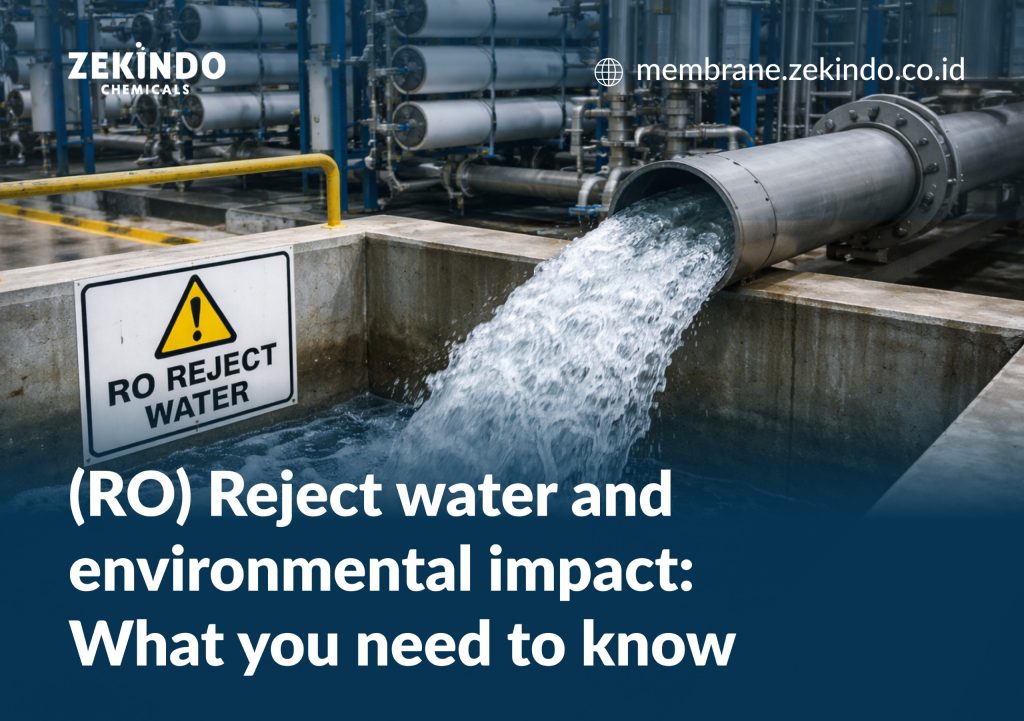
(RO) Reject Water and Environmental Impact: What You Need to Know
Reverse Osmosis (RO) is generally a water treatment method used to produce high-quality clean water, particularly in terms of purity. RO-treated water can be used for household needs, industrial applications, and various other facilities. Reverse Osmosis works based on a separation principle using a semi-permeable membrane. In this process, only water molecules are able to pass through the membrane, while dissolved substances with certain sizes and charges are retained. As a result, on the concentrate (reject) side, the concentration of dissolved substances becomes higher compared to the feed water.
Substances that are commonly retained and concentrated in RO reject water include:
1. Salts and minerals (TDS – Total Dissolved Solids)
2. Organic substances
3. Dissolved minerals, such as:
- Calcium
- Sodium
- Magnesium
- Chloride
- Sulfate
- Bicarbonate
4. Microorganisms:
- Bacteria
- Viruses
5. Residual chemicals contained in the water
Disposal Process of Reject Water from a Reverse Osmosis (RO) System
RO reject water must not be discharged indiscriminately because it contains higher concentrations of salts, minerals, and contaminants compared to raw water. Therefore, the disposal method must be adjusted according to the quality of the reject water, the capacity of the RO system, and applicable environmental regulations.
Alternatives for Handling Reject Water
Based on these considerations, there are several alternatives for managing and disposing of RO reject water that can be applied according to system conditions and requirements. These alternatives include:
1. Discharge to Drainage Systems or Public Channels
A drainage system, commonly known as a wastewater channel, is a method or facility used to convey or dispose of excess water (rainwater or wastewater) by gravity or pumping to prevent waterlogging and flooding.
This disposal method may be applied if the following conditions are met:
- The RO system scale is small to medium
- TDS, pH, and other water quality parameters still comply with wastewater discharge standards
- It does not contain hazardous chemicals in high concentrations
2. Discharge to a Wastewater Treatment Plant (WWTP) / IPAL
Wastewater generated from households, factories, hospitals, hotels, and other facilities is treated to ensure it is safe for discharge into the environment or for reuse.
Reject water can be mixed and treated together with other process wastewater so that:
- Environmental risks are more controlled
- Environmental permitting requirements can be fulfilled
3. Reuse for Non-Process Purposes
As an effort to improve water use efficiency, reject water may be reused if its quality allows, including for:
- Cooling tower make-up water
- Landscape irrigation
- Toilet flushing
- Cleaning of non-critical areas
This reuse is generally carried out after undergoing processes such as:
- Dilution
- pH adjustment
- Simple additional filtration
Therefore, the management of reject water from Reverse Osmosis (RO) systems must be planned and carried out in accordance with technical procedures and applicable environmental regulations, so that its utilization and disposal can be conducted safely, efficiently, and sustainably without causing negative impacts on the surrounding environment.
How ZEKINDO Supports Your RO Journey
Ensure your Reverse Osmosis system is equipped with an appropriate reject water management strategy. Consult with us to obtain safe, efficient, and compliant solutions for reject water treatment and disposal.
Explore our Reverse Osmosis product line on the ZEKINDO website!