


RO Antiscalant
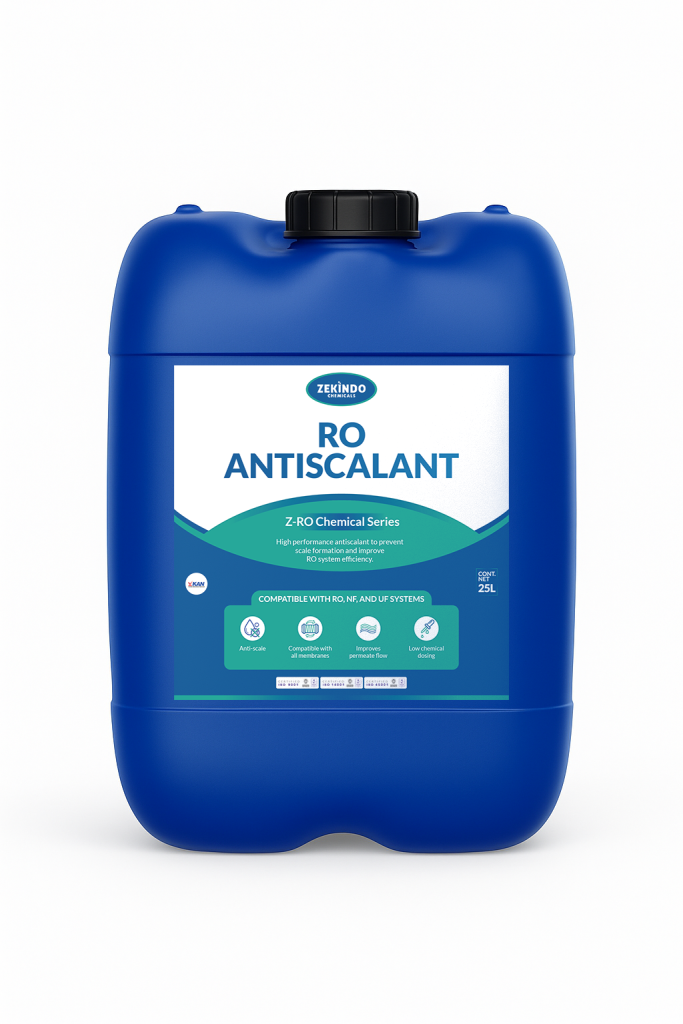
If left untreated, reject water with high levels of dissolved minerals can quickly form significant scale deposits, reducing membrane productivity. ZEKINDO RO Antiscalants are designed to inhibit mineral scaling and prevent rapid buildup in RO systems.
Which RO Chemicals Do You Need? Antiscalant, Biocide, Chlorine Scavenger, Membrane Cleaner (Acid & Alkaline)

Which RO Chemicals Do You Need? Antiscalant, Biocide, Chlorine Scavenger, Membrane Cleaner (Acid & Alkaline) Reverse Osmosis (RO) systems are built for long-term performance — but only if they are properly protected and maintained. Feedwater often contains minerals, microbes, and residual chemicals that can damage or foul membranes, leading to lower water quality, higher operating costs, and expensive replacements. This is where RO specialty chemicals play a critical role. Choosing the right ones ensures your system remains efficient and your membranes last longer. The main chemical categories to consider are: antiscalants, biocides, chlorine scavengers, and membrane cleaners (acidic and alkaline). Antiscalant – Prevent Scale Before It Forms As feedwater passes through the RO system, dissolved salts like calcium, barium, and silica can precipitate and form scale on the membrane surface. Scaling blocks water flow, increases pressure drop, and reduces salt rejection. Antiscalants are dosed continuously to prevent these salts from crystallizing. A good antiscalant allows your system to run at higher recovery rates without scale formation, saving energy and reducing cleaning frequency. Biocide – Control Microbial Growth Bacteria, algae, and fungi can colonize an RO system and form biofilm on membranes and piping. Biofouling increases pressure drop, reduces permeate flow, and can permanently damage membranes if not controlled. To control microbial growth without damaging membranes, operators often use non-oxidizing biocides in periodic shock doses. When applied correctly, they effectively suppress biofouling, especially in feedwater with high organic content. Non-oxidizing biocides are typically recommended for RO systems because they are membrane-safe. In contrast, oxidizing biocides like chlorine can damage most polyamide RO membranes and should be removed before water enters the system. Chlorine Scavenger – Protect Membranes from Oxidation Chlorine and other oxidizing agents are often present in municipal or pretreated feedwater as disinfectants. While useful for controlling microbes upstream, free chlorine can irreversibly damage RO membranes. Chlorine scavengers — such as sodium bisulfite — are dosed to neutralize residual chlorine and other oxidizers before the water enters the membranes. This step is essential to prevent oxidative degradation, which can shorten membrane life and compromise performance. Membrane Cleaner – Restore Performance with Acid and Alkaline Formulations Even with good pretreatment and regular chemical dosing, fouling will eventually occur. When normalized permeate flow declines or differential pressure rises, it’s a clear signal that membranes need chemical cleaning. RO membrane cleaners come in two main types: Acidic cleaners: Designed to dissolve inorganic scale such as calcium carbonate, barium sulfate, and metal hydroxides. Alkaline cleaners: Formulated to remove organic matter, biofilm, oils, and grease that cling to the membrane surface. Using the correct cleaner — and following the manufacturer’s recommended pH range and procedure — is critical. The wrong cleaner can leave deposits untouched or even damage the membrane. Regular cleaning restores salt rejection, reduces energy costs, and maximizes membrane lifespan. How ZEKINDO Helps You Choose and Use RO Chemicals With so many variables — feedwater composition, recovery rates, system design — choosing the right chemical program is not guesswork. ZEKINDO provides a complete range of RO chemicals: High-performance antiscalants for different scaling tendencies Non-oxidizing biocides for safe, effective microbial control Reliable chlorine scavengers to protect your membranes from oxidation Specialized acid and alkaline cleaners tailored to your membrane type and fouling profile Our technical team can evaluate your system’s operating data, diagnose fouling risks, and design a chemical treatment plan to keep your RO membranes clean, efficient, and reliable. The Bottom Line Using the correct RO chemicals is not optional — it’s essential to prevent scale, biofouling, and chemical damage. Antiscalants, biocides, chlorine scavengers, and the right membrane cleaners protect your investment and lower long-term costs. Contact ZEKINDO today to find the right RO chemicals and membrane cleaning solutions for your system. Contact Us
Air Laut vs. Air Payau: Apa Artinya bagi Membran RO Anda

Sea Water vs. Brackish Water: What It Means for Your RO Membranes Reverse Osmosis (RO) membranes are the workhorses of modern desalination and water treatment systems. Not all water sources are the same, and neither are RO membranes. The difference between seawater and brackish water directly impacts the type of membrane you need, the operating pressure required, and even your long-term operating costs. What’s the Difference Between Sea Water and Brackish Water? Sea Water: Typically contains 30,000 to 40,000 ppm of dissolved salts (TDS). Found in oceans and seas, it is highly saline and requires higher pressure to push water through RO membranes. Brackish Water: Contains 1,000 to 20,000 ppm TDS, making it saltier than freshwater but far less saline than seawater. Found in estuaries, coastal aquifers, or inland sources affected by seawater intrusion, it requires less pressure to treat than seawater. Why Does Salinity Matter for RO Membranes? Operating Pressure The salinity of feedwater — often measured as TDS (Total Dissolved Solids) — directly affects the osmotic pressure in an RO system. Higher TDS means higher osmotic pressure, which requires higher feed pressure to push water through the membrane. Seawater RO (SWRO) membranes are designed for very high salinity and typically operate at 800 to 1,200 psi (5.5 to 8.3 MPa). Brackish water RO (BWRO) membranes, with much lower salinity and osmotic pressure, usually run at 150 to 400 psi (1.0 to 2.8 MPa). Implication: Higher pressure means higher energy consumption. SWRO systems generally cost more to run. 2. Salt Rejection RequirementsSWRO membranes must deliver extremely high salt rejection (typically ≥99.5%) to turn seawater into potable water. BWRO membranes, handling much lower salinity, are designed for high rejection as well (usually ≥99%, and up to ~99.7% depending on feedwater composition and temperature), but their required performance threshold is slightly lower than SWRO. Implication: Using the wrong membrane type can lead to poor water quality or excessive strain on the system. 3. Membrane Construction and Durability SWRO membranes are built to withstand harsh seawater environments and are more chemically and structurally robust. BWRO membranes prioritize efficiency and lower energy consumption for less demanding conditions. Implication: A BWRO membrane installed in seawater would fail quickly. An SWRO membrane used in brackish water would work but consume unnecessary power. Choosing the Right RO Membrane This is where ZEKINDO RO membranes make the decision easier. Our product line includes: ZEKINDO SWRO membranes for high-salinity seawater applications, engineered for durability and maximum salt rejection. ZEKINDO BWRO membranes optimized for lower salinity brackish sources, delivering excellent performance with lower energy requirements. Feature BWRO (Brackish Water RO) SWRO (Seawater RO) Feedwater salinity 500–2,000 ppm NaCl ~32,000 ppm NaCl Operating pressure 100–255 psi (0.69–1.55 MPa) ~800 psi (5.5 MPa) Salt rejection ~99.2% – 99.7% ~99.6% – 99.8% (minimum 99.7%–99.8%) Design variants Standard BWRO, Fouling-Resistant (FR), Ultra-Low Pressure (ULP), Extremely Low Energy (XLP) Standard SWRO, High Rejection (HR), High Rejection Low Energy (HRLE) Key design features Long element life, good cleaning performance, optimized for lower-salinity water Designed for higher operating pressures to overcome seawater osmotic pressure–thick membrane sheet, high cross-linking for chemical resistance, short sheet design to reduce fouling Typical applications Groundwater, brackish river water, low-salinity industrial water Seawater desalination, high-salinity industrial water Whether you are running an industrial desalination plant or a commercial water purification system, ZEKINDO provides reliable solutions tailored to your feedwater conditions. The Bottom Line Knowing whether your feedwater is seawater or brackish water is not just a technical detail. It is the foundation of a reliable RO system. Using the correct membrane type protects your investment, optimizes energy use, and ensures consistent water quality. Choose ZEKINDO RO membranes to ensure your system performs at its best, no matter the water source.Contact us today to discuss your needs or place an order. Contact Us
Choosing the Right BWRO Membrane: ULP, FR, or XLP?

Choosing the Right BWRO Membrane: ULP, BW, BWFR, or XLP? Brackish Water Reverse Osmosis (BWRO) systems are widely used in industries, commercial facilities, and even municipal water treatment. Selecting the correct type of BWRO membrane is essential for achieving consistent water quality, minimizing operational costs, and prolonging system life. Among the most common BWRO membrane types are ULP (Ultra Low Pressure), BW (standard Brackish Water), BWFR (Fouling Resistant), and XLP (Extra Low Pressure). Each is designed for specific feedwater conditions and performance requirements. ULP – Ultra Low Pressure When to use it: Moderate-salinity brackish water Systems where energy efficiency is critical Applications requiring stable performance at reduced pressure Key advantages: Operates at significantly lower pressure compared to standard BWRO membranes Reduces energy costs by lowering pump requirements Maintains high salt rejection (typically >99%) Note: Higher salinity feedwater may reduce efficiency, making ULP membranes less suitable for TDS well above 2,000 ppm Ideal for: industrial facilities and commercial systems focused on reducing operating expenses without sacrificing product water quality. BW – Standard Brackish Water When to use it: Typical brackish water with stable quality Applications where reliability is more important than ultra-low energy use Key advantages: Proven, robust performance in a wide range of conditions Good balance of pressure requirements and salt rejection Cost-effective for standard applications Ideal for: municipal, industrial, and commercial systems needing consistent performance without special fouling or energy constraints. Pretreatment is still recommended for best performance. BWFR – Fouling Resistant When to use it: Feedwater with high levels of organics, colloids, or biological contaminants Locations where pre-treatment is limited or feedwater is variable Key advantages: Special surface design and chemistry minimize fouling buildup Easier to clean and longer cleaning intervals Helps maintain stable flux even in challenging conditions Ideal for: systems dealing with rivers, lakes, or wells prone to organic contamination and frequent biofouling. XLP – Extra Low Pressure When to use it: Low-salinity feedwater Applications requiring maximum energy savings Projects where capital and operating costs must be minimized Key advantages: Lowest operating pressure among BWRO membranes Significantly reduces power consumption for pumping Excellent choice where feedwater salinity is well below average brackish levels Ideal for: municipal or commercial applications where feedwater is clean and has low TDS levels. How ZEKINDO Helps You Choose the Right Membrane Selecting the correct BWRO membrane is not just about matching specs — it’s about understanding your feedwater quality, pressure constraints, and production goals. ZEKINDO RO membranes include ULP, BW, BWFR, and XLP options, allowing you to choose the perfect fit: ULP membranes for balanced efficiency and performance BW membranes for reliable, general-purpose applications BWFR membranes for reliability in fouling-prone water sources XLP membranes for maximum energy savings in low-TDS conditions With ZEKINDO, you don’t have to guess which technology is right — our technical team can evaluate your feedwater data and recommend the best solution to protect your system and reduce your long-term costs. The Bottom Line Choosing the wrong membrane can increase operating costs, shorten equipment life, or compromise water quality. Whether you need ULP, BW, BWFR, or XLP membranes, ZEKINDO provides high-performance BWRO solutions tailored to your application. Contact ZEKINDO today to get expert advice or order the right BWRO membranes for your system. Contact Us
ZEKINDO SWRO Membrane Series
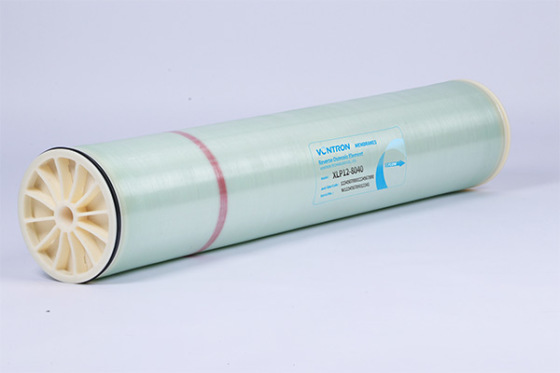
Seri Membran ZEKINDO SWRO adalah elemen membran berpenolakan tinggi yang dikembangkan untuk desalinasi air laut. Mereka memastikan kinerja jangka panjang dan stabil dengan penolakan garam yang tinggi secara konsisten sambil mempertahankan tingkat aliran standar.